AI & Robots
How can a phone understand your voice, or a robot explore the Moon? Discover artificial intelligence, the Internet of Things, smart cities, and the robots that help people in hospitals, farms, warehouses and space.
1What is Artificial Intelligence?
Artificial Intelligence (AI) means making machines — especially computers — that can do tasks which normally need human-like thinking: learning, understanding speech and pictures, solving problems and making decisions. AI-based machines learn from experience (data) and can then do the task without a person guiding every step.
"Artificial" means made by people, and "intelligence" means the ability to learn and think. The name "artificial intelligence" was given by the scientist John McCarthy in the 1950s.
| Human (natural) intelligence | Artificial intelligence |
|---|---|
| Learns from life experiences | Learns from data and algorithms |
| Has real feelings, imagination and creativity | Has no real feelings |
| Gets tired and needs rest | Can work for long hours without getting tired |
| Understands the world with common sense | Good at one job it was trained for; can make silly mistakes outside it |
"AI has feelings just like humans" and "AI needs no data" are both false. AI copies some kinds of human thinking, but it has no feelings, and it can't learn anything without data. Also: not every machine with a screen is AI — a calculator just follows fixed rules.
Which of these is an example of AI?
2How machines learn from examples
How did you learn what a cat looks like? You saw many cats! AI learns in a similar way. This is called machine learning.
- The examples are called training data. The more good, varied examples, the better the AI becomes.
- If the examples are wrong or one-sided, the AI learns wrong things — just like GIGO (Garbage In, Garbage Out).
- AI finds patterns (pointy ears, whiskers) — it does not "understand" like a person.
- With a grown-up, open
https://quickdraw.withgoogle.com/in a browser and click Let's Draw! - The AI asks you to draw 6 things (like a cake, a rat or a pizza), one by one — 20 seconds each.
- While you draw, the AI guesses what it is, in real time.
- It learnt from drawings made by millions of people, and keeps improving.
3AI in daily life
🗣️ Voice assistants
Alexa, Siri and Google Assistant use speech recognition and natural language processing to understand spoken human language and reply.
🗺️ Maps
Map apps study traffic from many phones to find the fastest route and predict when you will arrive.
🎬 Recommendations
Video, music and shopping apps suggest what you may like, based on what you watched or bought before.
🙂 Face unlock
Phones and Windows Hello recognise your face to unlock.
💬 Chatbots
Chat helpers answer questions by typing, on websites and apps.
🌐 Translation
Apps translate Hindi to English (and more) — even from a photo of a sign.
📧 Spam filters
Email services learn to move junk mail to the Spam folder.
🔍 Search engines
Google and Bing use AI for voice search and image search.
🚗 Self-driving cars
Cameras and sensors plus AI help a car drive without a person steering.
After Anu watches three cartoon videos about space, the app shows her more space videos. Which AI use is this?
4AI & smart living: IoT and AIoT
The Internet of Things (IoT) is a network of everyday objects — lights, fans, meters, cameras, dustbins, cars — fitted with sensors and connected to the internet, so they can collect and share data.
When AI is added to IoT, it becomes AIoT — Artificial Intelligence of Things. The devices collect data, and AI adds human-like awareness and decision-making so the data is used smartly.
Smart cities
Smart cities use IoT devices such as connected sensors, lights and meters to collect data and improve life while using fewer resources.
| Benefit | How |
|---|---|
| Save energy, cut carbon emission | Sensors detect pipe leaks, adjust LED streetlights, and smart meters reduce waste of water and electricity. |
| Improve air quality | Air pressure, pollution, humidity and gases are checked in real time. |
| Reduce traffic jams | Smart traffic signals share real-time data to suggest the fastest routes and free parking spots. |
| Better waste management | Smart dustbins signal when they are full, so trucks come only when needed. |
| Security and safety | Smart cameras with face recognition, fire and smoke alarms, and smart door locks. |
More AIoT areas
🏥 Smart healthcare
Helps diagnose diseases and monitor patients' health. Records are kept accurately, so care is more effective, cheaper and personal.
🚦 Smart transportation
Smart toll and ticketing (a car with an IoT tag is identified up to a kilometre away and the barrier lifts), connected cars that talk to avoid crashes, vehicle tracking, and public transport management.
🌾 Smart agriculture
Sensors check soil moisture, light, humidity, temperature and crop health; irrigation is automatic; farmers check fields from far away.
📦 Smart logistics
Tracks goods at every step in real time, so deliveries are not delayed or lost.
At home, smart homes use AIoT too: lights and fans you control by voice, ACs that adjust to the room, doorbells with cameras.
Match the area to its job! Sowing seeds and soil sensors = agriculture, not transportation. Tolls, traffic and vehicles = transportation. Tracking parcels = logistics. Patient monitoring = healthcare.
A company follows every parcel on a live map, from the warehouse to your door. This is an example of:
5Using AI responsibly
AI is a helpful tool, but you are the thinker. Follow these rules:
- AI can be wrong. Check important facts in your textbook or on trusted sites (.gov, .edu).
- Keep secrets secret. Never type your full name, address, school, phone number or passwords into a chatbot.
- Be honest. Don't hand in AI-written work as your own — that is like plagiarism. Use AI to learn, then write in your own words.
- Not everything is real. AI can make fake pictures, voices and videos. Don't believe or forward something just because it looks real.
- Ask a trusted adult before using a new AI app, and tell them if something feels strange.
- People stay in charge. In hospitals, AI helps — doctors decide.
A chatbot asks Veer for his home address "to give better answers". What should he do?
6What is a robot?
Robots are smart machines that follow instructions, can work on their own, and do jobs that are difficult, boring or dangerous for humans. They make work easier, faster and safer.
When a machine does a job by itself, without a person doing each step, it is called automation — like a washing machine running its full cycle, or robots packing boxes. The study of designing and building robots is called robotics.
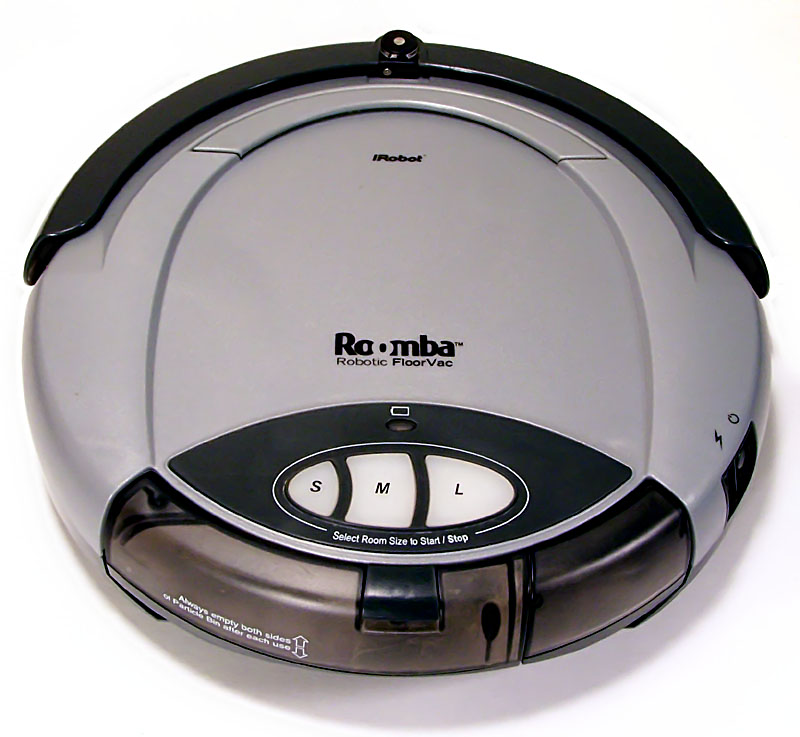
Sense → Think → Act
- Sense: its bump and distance sensors notice a wall ahead.
- Think: the controller decides, "Turn left."
- Act: the motors turn the wheels and it moves away, still cleaning.
A robot is not a living creature — it does not eat, sleep or feel. And robots are not only human-shaped: a robot vacuum, a car-factory arm and a Mars rover are all robots. Also remember the order: the sensor only collects information; the controller decides; the motor moves.
The word robot first appeared in a 1920 play called R.U.R. by Czech writer Karel Čapek. It comes from the Czech word robota, meaning "forced work".
In a robot, which part works like its "brain" and decides what to do?
7Robots in various sectors
| Sector | What robots do |
|---|---|
| 🛡️ Defence & security | Do risky jobs like finding and removing bombs and watching over areas, keeping people safe. |
| 🌾 Agriculture | Plant seeds, pick fruits and vegetables, and check that plants are growing well. |
| 🏥 Healthcare | Help doctors during surgery, help patients recover faster, and help people walk again after an injury. |
| 🏫 Education | Teach subjects in a fun way, turning lessons into games and activities. |
| 🛒 Retail (warehouses) | Keep track of stock and pack orders for people who shop online. |
| 🚗 Transportation | Self-driving cars and delivery drones carry people and packages without a driver. |
| 🔬 Research & exploration | Help scientists do experiments and explore the deep sea and outer space (Moon, Mars), collecting data. |
| 🏭 Industry | Weld, paint and assemble cars in factories, quickly and exactly, all day. |
| 🏠 Homes | Robot vacuum cleaners and lawn mowers do boring chores. |

India's robots in space


Chandrayaan-3's Vikram lander touched down on the Moon on 23 August 2023, and India now celebrates 23 August as National Space Day. Vyommitra was designed at ISRO's Vikram Sarabhai Space Centre in Thiruvananthapuram; it can speak Hindi and English, operate control panels and give warnings, as a helper before humans fly.
Which robot is matched with the wrong sector?
8Famous robots

🤖 Humanoid
A robot shaped like a human, with a head, arms and legs — like ASIMO. Vyommitra is a half-humanoid (no legs).
🔴 Mars rovers
NASA's Curiosity and Perseverance drive on Mars, taking photos and studying rocks.
🌙 Pragyan
ISRO's six-wheeled Moon rover from Chandrayaan-3.
🩺 da Vinci
A surgical robot that helps doctors in delicate operations.
9AI and the five generations of computers
Computers are grouped into generations by the main technology inside them. AI belongs to the fifth generation — the present and the future.
Which generation of computers is based on microprocessors?
Explore more
- 🎮Quick, Draw!withgoogle.com · draw and let AI guess
- ▶️How AI Workscode.org · short videos and activities
- 📖Artificial intelligenceSimple English Wikipedia · easy reading
- 📖RobotSimple English Wikipedia · types of robots
- 📖VyommitraWikipedia · ISRO's space robot
- 🖼️Mars roversNASA Space Place · robots on Mars
10Quick recap
- AI = Artificial Intelligence: machines doing tasks that need human-like thinking — learning, understanding speech and pictures, deciding.
- Humans have feelings and creativity; AI learns from data, works without tiring, but has no feelings.
- Machine learning: many labelled examples → AI finds patterns → it predicts. Bad data → bad results.
- Quick, Draw!: 6 drawings, 20 seconds each; the AI guesses and learns from millions of drawings.
- AI in daily life: voice assistants (speech + natural language), maps, recommendations, face unlock, chatbots, spam filters.
- IoT = everyday objects with sensors connected to the internet. AIoT = Artificial Intelligence of Things.
- Smart city: leaks, LED lights, air quality, traffic, smart bins, safety. Also smart healthcare, transportation (tolls), agriculture (soil) and logistics (tracking).
- Use AI responsibly: check facts, keep personal info private, be honest, ask an adult.
- A robot is a smart machine that follows instructions and does difficult, boring or dangerous jobs.
- Robots sense (sensors), think (controller) and act (motors/actuators). Automation = machines working by themselves.
- Sectors: defence (bombs), agriculture (seeds, fruit), healthcare (surgery), education, retail (stock & packing), transport (self-driving cars, drones), research (Moon, Mars, deep sea).
- ISRO: Pragyan rover (Chandrayaan-3, 2023) and Vyommitra half-humanoid (Gaganyaan).
- AI is the main feature of the fifth generation of computers.